Helical heaps have made their place in commercial job considering that they mix foreseeable habits along with swift setup. You acquire immediate ability analyses from twist relationship, and you may install in tight city websites with low spoils. Still, every seasoned installer and also engineer understands the same honest truth: the actual evidence of a deep-seated foundation is in the bunch test. On a healthcare facility add-on in clay-based, on a storage facility piece where settlement tolerances are actually stingy, or even on a keeping wall structure utilizing helical tieback anchors, you merely obtain peace of mind when the piles or anchors show their efficiency under controlled load.
This short article focuses on tons screening protocols customized to commercial helical pile installation and also helical tieback anchor work. It also touches the sides where micropiles, protection stacks, and also various other deep foundation repair techniques satisfy the exact same requirement for proof. The target is functional guidance: what to check, how to evaluate it, as well as exactly how to translate the results without receiving misguided by noise in the records or unrealistic expectations.
Why our experts check, even when torque appears good
Helical piles have a persuasive sales pitch: put up with an adjusted drive crown, monitor twist, as well as associate to capacity. In clean sands as well as sands, the connection frequently holds within 10 to twenty per-cent, which is excellent for creation. Commercial helical pile installation, however, seldom occurs in book strata. Our company find layered loads, varved clays, sat on groundwater, as well as utility corridors that have actually disturbed the dirt over many years. Twist spikes are common, and also gentle pockets can conceal in between rigid horizons.
Load screening verifies 3 points you can easily not find during the course of installment. To begin with, the actual bunch transfer mechanism at the coils and also along the shaft. Second, creep actions gradually, which matters when a commercial foundation stabilization program should live under a delicate skyscraper. Third, the structural performance of the system itself: couplers, shafts, grout columns in hybrid systems, as well as caps.
I recollect a retail slab-on-grade retrofit where twist suggested fifty kips every stack. The weight test presented satisfactory greatest ability near that market value, however the movement at solution payload was actually very big for the piece. The solution entailed using larger lead parts with deeper coils to decrease deflection, certainly not only going after much higher twist. Without a payload exam, our company will possess complied with the character of ability and also still let down the manager with piece curling and also partition cracking.
Choosing an exam style that suits the project
Static central compression and tension tests are the backbone for helical piles as well as helical anchors. Lateral examinations are less typical however essential for signage, tower bases, and also some canopy supports. For tieback anchors, proof and functionality examinations under tension describe the plan. Dynamic exams appear a lot more along with steered heaps than along with helicals, as well as while you may operate rapid tons examinations on micropiles, helical devices answer most ideal to sustained fixed filling due to the fact that displacement and also creep under constant tons are actually the vital criteria.
For commercial resistance pile installation as well as micropile installation, stationary tests adhere to similar logic, yet the machinery differs. Micropiles commonly welcome pressure evaluates to separate connect region from ground anchor zone. Resistance stacks, specifically drive boat docks made use of in structural foundation repair, benefit from on-jack gauges that looking glass company situations during the course of underpinning.
When proprietors ask for value engineering, the temptation is to cut tons screening initially. That is actually a misleading economic condition. A singular well executed efficiency test on a propitiatory helical pile, plus proof tests on a percentage of manufacturing devices, normally minimizes the overall risk and also may also enable rational reductions in material or intensity that save much more than the test costs.
Standards, criteria, as well as useful thresholds
Most commercial standards draw from ICC-ES approval standards, ASTM criteria, and geotechnical suggestions. For helical piles as well as helical anchors, the typical references feature ICC-ES AC358 as well as ASTM D1143 for squeezing, ASTM D3689 for pressure, and also ASTM D3966 for sidewise. Tieback anchors usually follow PTI recommendations for screening as well as lock-off treatments. These records lay out step loading, hold times, as well as recognition criteria for action and also creep.
Serviceability restrictions are as essential as ultimate capacity. For commercial foundation repair and also new building, solution load action restrictions may vary from 0.25 to 0.5 ins at complete design bunch, at times tighter for slab-supported equipment. Creep requirements at the final hold step normally restrain movement to a few thousandths of an inch every min over a specified period, usually 10 moments. The precise numbers acquire tuned to predict necessities, dirt kind, as well as danger tolerance.
One useful general rule: if you are putting up in smooth clay-baseds with liquidity indices near 0.7 or much higher, insist on longer grip time frames. Clay-based needs opportunity to present its colours. Sands respond rapidly, however can easily show leisure. Silts partake the uncertain center. Your process must demonstrate the ground's time reliance or even you may pass an examination that later on ends up being a resolution claim.
Equipment that keeps information honest
Load screening rigs are just just as good as their referrals. The response framework must be actually stiff and also secured in a way that does certainly not pollute the size. For squeezing exams on helical piles, this commonly means a test shaft connected to nearby reaction stacks ingrained deep sufficient to stay away from effect from the test pile. In pressure, response structures nab onto anchors or even deadmen. For helical tieback anchor testing, the response is typically the wall on its own or a steel strongback along with appropriate spreader beams.
Digital tons cells and also movement transducers have actually come to be the standard in industrial work, certainly not merely nice-to-have. A 100-ton hollow ram joined an adjusted stress transducer is alright if you possess a fresh calibration contour and confirm every gauge just before the exam collection. Direct displacement transducers mounted independently of the port, going through versus a fixed recommendation outside the response area, deal with the false action that stems from framework deflection or even jack seating. If your information acquisition system records tons as well as variation at 1 Hz or even faster, trending and creep analysis come to be straightforward.
For micropiles as well as resistance heaps, you may also include dial evaluates pinned to a remote recommendation shaft to cross-check the electronic tools. Verboseness issues when a tiny reading can sway recognition. On a courthouse founding with resistance stacks, our company located an angled jack slot providing higher tension readings. The dial evaluates said to the actual story. That small cross-check spared a pile cut-off as well as re-drive.
Establishing an examination source that makes confidence
On big internet sites, soils differ. Examining a singular helical pile in the superficial filler at the northern side tells you little about the deeper alluvium near the river. The exam matrix requires to spread all over the internet site, align along with the geotechnical profile, and represent each layout variant: heap top configurations, coil diameters, bar dimensions, as well as embedment midsts. When commercial helical pile installation sustains both pillar loads as well as piece tons, exam both instances. For helical tieback anchor deal with a tipped preserving wall structure, examination the upper as well as lesser workbenches due to the fact that additional charge and soil quality will differ.
A common design sets a couple of efficiency tests, usually to 200 per-cent of layout load, along with verification screening on 5 to 10 percent of manufacturing units to 133 per-cent. Ventures along with higher repercussions or blended grounds might push efficiency exams to 250 per-cent as well as proof to 150 percent. Tieback anchors normally get evidence assessed to a lock-off approach, then loaded symphonious to 120 to 133 per-cent, along with creep determined at the top hold. If activity or even creep surpasses acceptance limits, investigate and readjust the style just before proceeding with production.
On a coordinations warehouse outside Des Moines, our experts worked three execution exams on helical piles with 10-12-14 inch helices. The southerly exam struck thick sand early, as well as the capacity surpassed the torque estimation by virtually 30 percent. The northerly region sat over a silty clay-based coating and matched torque relationship within 5 per-cent. The mid zone appeared common but presented noticable creep at 150 per-cent of concept. Our team tightened up company action standards there and indicated longer helices to reach a reduced tension perspective, which eventually kept piece joints tight under forklift traffic.
Step launching that discloses true behavior
Static tons exams need to balance effectiveness with diagnostic worth. Tipping too promptly conceals time-dependent activities and can misdiagnose the capability. A sound protocol for compression may load the helical pile to 25 per-cent, 50 percent, 75 percent, 100 percent, then 133 per-cent, with 5 to 10 min keeps at each step and also longer keeps at the top. After connecting with the optimal exam bunch, dump symphonious, keeping briefly to videotape elastic healing. If the spec requires a failing test, proceed filling in much smaller increments till the motion accelerates without lots increase, or until you arrive at the risk-free limits of the frame.
For pressure, the measures and also carries are actually similar. Keep an eye on first seating or even bedding-in movement as the hookups and also cement, if any, take up endurances. Helical tieback anchors commonly comply with an evidence exam cycle: seat at a nominal tons, cycle around the maximum examination tons along with specified holds, at that point return to the lock-off bunch. Creep is measured only at the top bunch on a clean request, certainly not during cycles, to avoid confusing plastic specified along with time-dependent deformation.
The keep opportunity debate turns up on nearly every task. Some really want 5 tiny holds for rate, others push for 10 or even 60 moments in clay-baseds. My strategy is to straighten with the soil. Sands and crushed rocks, 5 minute conducts at advanced beginner steps as well as 10 to 15 minutes at the max are often appropriate. In fatty tissue clays, double those times. If your displacement contour flattens, you can easily validate going on. If it maintains slipping at a quantifiable fee, do certainly not disregard the trend.
Reading the contours without misleading yourself
An excellent tons examination report narrates. The payload versus activity plot shows rigidity adjustments as helices involve various layers, as well as the dump road mean ray suppleness versus ground collection. In a clean outcome, the very first part of the contour is actually steep, after that it softens as set in motion resistance cultivates, and also ultimately it either plateaus towards failure or keeps dependable within the service selection. Creep plots distinct elastic motion coming from time-dependent soil response.
Look for refined hints. If the displacement dives at reduced loads, check for seats or structure slippage. If creep at 133 percent of concept declines from 0.005 inches per min to 0.001 ins per min over the grip, that is healthy and balanced combination. If it stays at or over 0.01 ins every minute, especially in clay, you are coming close to a service restriction regardless of whether ultimate capacity is actually certainly not reached. Tiebacks with too much rebound on offload may have bed linen slop near the bearing plate rather than concerns in the ground. Tidy up the bearing surfaces and also retest prior to altering the design.
Micropiles and also resistance piles tell identical tales with somewhat different signatures. Micropiles along with a lengthy bond span reveal a steady tightness rise as additional of the grout-rock interface mobilizes. Protection heaps driven for deep foundation repair present load-displacement contours dominated by friction along the shaft and also often show snap-back on dump if the heap latches right into a stiffer layer at intensity. With all cases, deal with how the load moves as well as whether the noted motion goes with the system you expect.
The link in between installation records as well as test outcomes
Installers often obey torque graphes, and also forever factor. Helical twist to capacity relationships, calibrated by the particular helix geometry as well as shaft type, generate a fast price quote of greatest protection. A mistake I observe is actually treating torque readings as scripture all over combined profiles. If the lead section sits in tense sand yet the top helix experiences in loose fill, you may hit aim at twist while leaving the top bearing factor underdeveloped, which hurts stiffness as well as enhances settlement deal under solution tons. A payload test will definitely expose this in the very early portion of the curve.
Track torque per change, crowd stress, and cost of infiltration. A consistent torque increase along with uniform infiltration lead to regular ground. Spikes along with stalls propose cobbles or particles. When these trademarks connect along with the test site, you obtain circumstance for the motion habits. On a commercial helical pile installation underneath a chiller pad, our company observed great torque at shallow depth. The load examination sensed soft at company. The repair was turning much deeper to seat all-time low coil into pure dirt, which tensed the response and also cut the service motion in half.
For commercial resistance pile installation, the analog is disk stress and stroke per push. For micropiles, it is actually grout take and also tremie pressure during positioning, plus connection length and also stone outlet criteria. If the lots examination says something and also your setup records state one more, investigate before you opt for a side.
Acceptance requirements that do certainly not package you in
Rigid criteria often trigger unnecessary pile replacements. Realistic recognition for a helical turn in squeezing could feature a max internet activity at design lots, state 0.5 ins, and also a creep fee listed below an indicated threshold, including 0.01 inches in the last minute of a 10 min hold at 133 per-cent of design. Tieback anchors foundation repair typically call for less than 0.04 ins of motion in between one as well as 10 moments on top examination bunch, complied with through steady lock-off. These are actually instances, not common worths. Ventures along with delicate exteriors or even high-precision equipment may require tighter amounts, while bulk storage or shelfs can endure more.
Remember the business between utmost ability and also solution functionality. You may accomplish higher utmost ability along with tiny helices in dense sand, yet still have more elastic motion than the structure desires. Bigger coils or even deeper embedment boost call location and reduce variation at service. If a test directly fails a company action requirement yet presents low creep and higher ultimate safety and security, a moderate redesign often handles it without junking the stack type.
Tension screening and also the subtleties of tieback anchors
Helical tieback anchors act in different ways than upright stacks. The tons road goes through the anchor head, along bum rap, as well as in to the coils settled in the passive zone. The complimentary span, crawl space encapsulation costs whether a soft extension or even a sleeved area, must stay unbonded near the wall to make it possible for lock-off without tons loss. During the course of commercial helical tieback anchor installation, steady installation angle, coil space, and deepness behind the academic failing plane concern more than most appreciate.
A sound tieback evidence examination patterns the bunch to the optimal test level, holds for creep evaluation, and afterwards lessens to the lock-off tons while determining flexible recovery. Too much non-recoverable motion indicate soil yielding or even seating at the head. If the support creeps unacceptably on top bunch, you might be too close to the failing airplane or even sitting in an unstable level. Expand the support or readjust the angle of inclination to chase after better soil. Carry out certainly not rely upon much higher torque alone to deal with a geometry problem.
Keep an eye on wall structure interaction. I checked out a specialist criticize a tieback for creep when the strongback dispersed under tons, faking anchor activity. Independent referral beam of lights and mindful setup avoid this. Great testing guards both the installer and the owner.
When bunch screening fulfills repair service work
Deep foundation fixing in industrial setups rarely grants the deluxe of clearance. You are actually functioning in basements, under mechanical spaces, or even next to energetic utilities. For structural foundation repair that makes use of protection stacks or even helical piles, exam process require to conform to limited clearances. Transportable response frames, briefer movement jacks, as well as fractional reference shafts keep readings well-maintained. Foundation crack repair and piece stablizing commonly link into this course, due to the fact that load testing educates exactly how boldy you may lift or even how much lots to move before the construct responds.
I have actually had effectiveness making use of an aviator exam on two or even three underpinning factors prior to committing to a building-wide airlift. The examination tells you exactly how the footing distributes load, how the stonework or even concrete will definitely react, and what assist increments the framework accepts. It can easily also show whether combined soil coatings under various gulfs need to have different heap types, for instance utilizing helical piles in sandier regions as well as micropiles where patches prevent helical advance.
Documentation that stands up later
Commercial ventures live as well as pass away by their documents. A well-maintained bunch examination deal consists of gradation certifications, setup logs, exam treatments, raw and decreased information, secret plans, photographs of the create, as well as industry keep in minds describing any type of abnormalities. When a 3rd party special examiner indicators off, feature their file. If you differed the original program, show the designer's approval. These records secure your crew if issues arise and give procedures staff a standard for future modifications.
Many owners now assume electronic deliverables that feed into their property management devices. Simple steps like naming documents through stack ID as well as site, following one coordinate device, and incorporating a short story for each and every exam lower hassles when somebody takes another look at the venture years later.
Lessons picked up from the field
- Load tests hardly obtain a 2nd chance. Put in the time to set individual recommendations and verify every gauge prior to the first bunch action. A tidy 1st test earns leave and also speeds authorization for the rest. Torque is actually a manual, certainly not a verdict. Use it to steer installation, then count on lots screening to verify your expectations. If the outcomes problem, determine why, certainly not that is right. Helical piles master speed, yet velocity tempts shortcuts. Keep keep opportunities that match the soil. A 10 min time out is low-cost matched up to a flooring that works out a quarter in under occupancy. Cross-train your team. The installer that understands just how bunch test contours need to appear will certainly observe an issue during the course of setup as well as repair it just before the test reveals it. Accept that certainly not every stack will be actually perfect. Layout an examination matrix and acceptance platform that flags outliers without stalling the entire job.
Where other devices intersect
Commercial micro pile setup, commonly meant micropile installation, portions a lot of the screening DNA. Due to the fact that micropiles count on grout-to-ground bond, their efficiency depends on building and construction top quality where you may not observe it. Stationary payload examinations validate both connection advantage as well as structural capability of the bar or covering. Tieback anchors, whether helical anchors or even grouted anchors, require the exact same regimented screening due to the fact that their work is typically about service activity management over time.
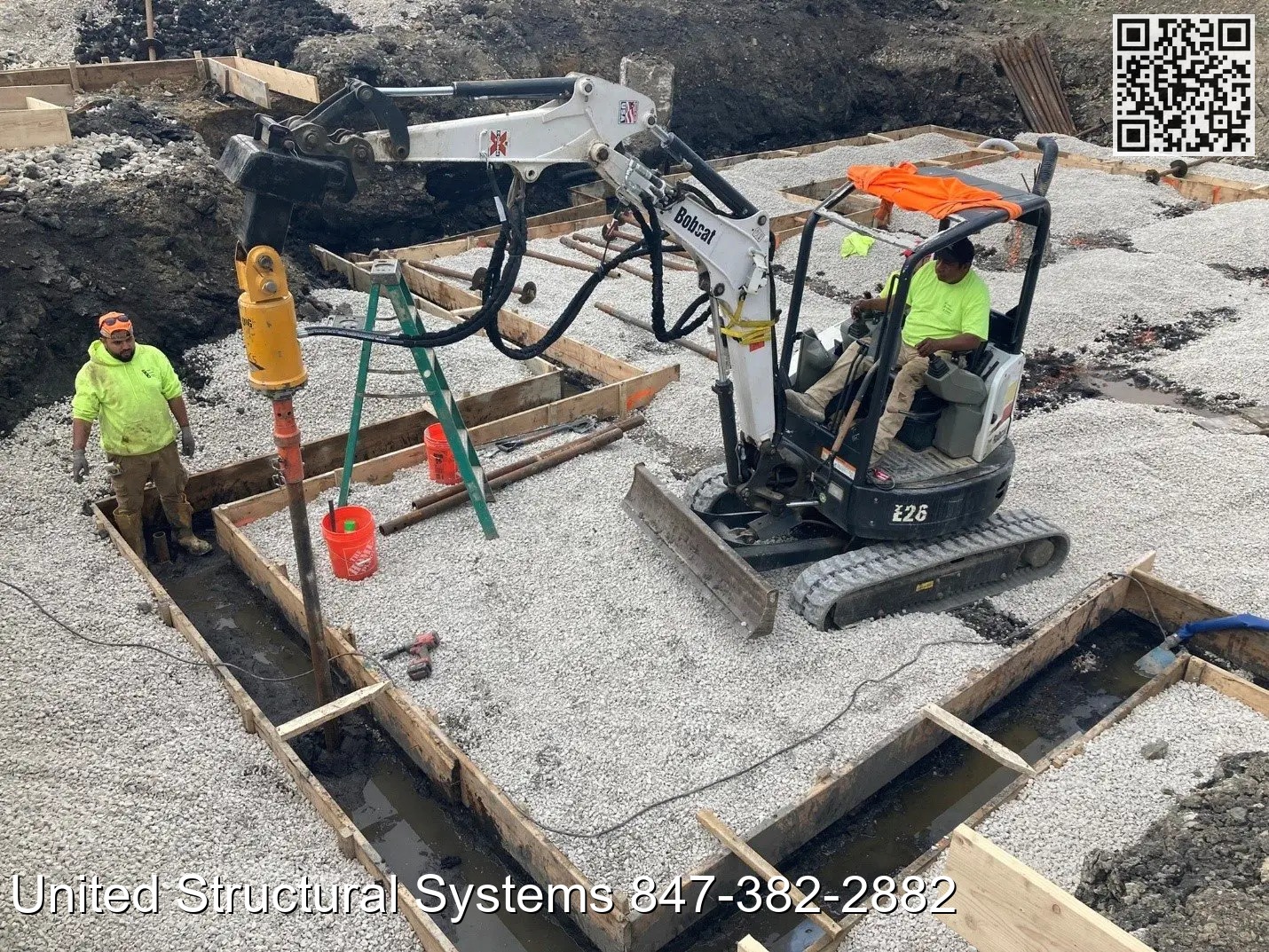
Resistance piles have their place in structural foundation repair, specifically when headroom is cramping and also grounds make it possible for modern hoisting to bunch. Proof screening throughout installation, utilizing the building as reaction, validates the tons each boat dock are going to carry. Supplemental fixed examinations on chosen boat docks, independent of the establishment, support calibrate desires as well as stay away from overpromising to the owner.
When a venture mixes systems, like using helical piles for new columns as well as micropiles for heavily loaded primaries, always keep the screening methods specific but worked with. The owner really wants one tale concerning performance, not dueling charts.
Final thought and feelings from an active task trailer
When you operate commercial helical pile installation at scale, lots screening ends up being greater than a checkbox. It is your feedback loophole. It informs you whether a 12 inch top coil should be a 14, whether the embedment needs to have an additional five feets, whether the response framework is extremely soft, and whether your crew reads the ground correctly. It divides a smooth handover from an irritating settlement deal issue 6 months later.
The greatest courses tie together three threads. The geotechnical report sets assumptions for soil habits. The setup logs record actual disorders. The lots exams reconcile the two and also create the efficiency chapter. Carry out that, et cetera of the job observes: commercial foundation stabilization proceeds with confidence, structural foundation repair keeps its line, and also even the meager foundation crack repair perks since the bottom stays steady.
I have actually gotten on web sites where a single truthful lots examination altered the trajectory of the project right. Our team added deepness, altered a coil series, tightened a spec, as well as everyone rested better. That is the mark of a great protocol. It carries out certainly not only pass or stop working a stack. It shows you just how the ground is actually going to alleviate your construct for the next fifty years.
 Ask ChatGPT
 Ask Grok
 Ask Perplexity
 Ask Claude
 Ask Google AI
 Ask You